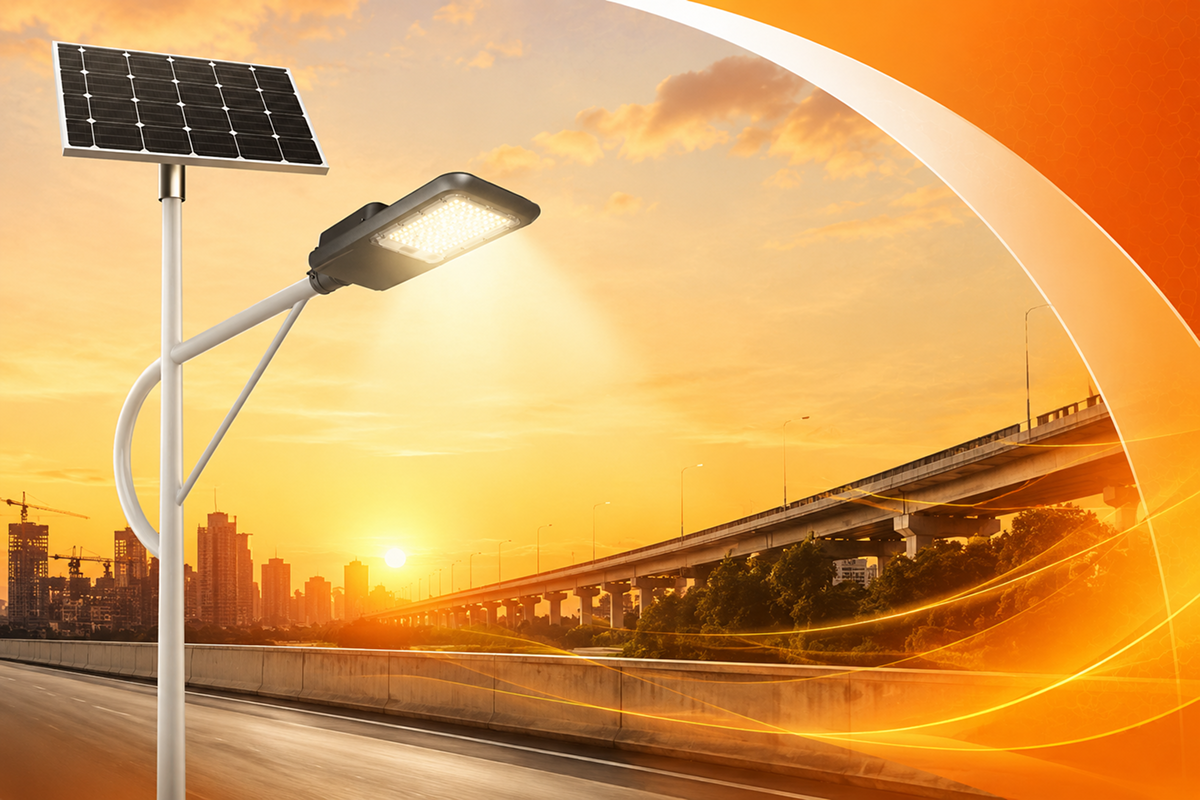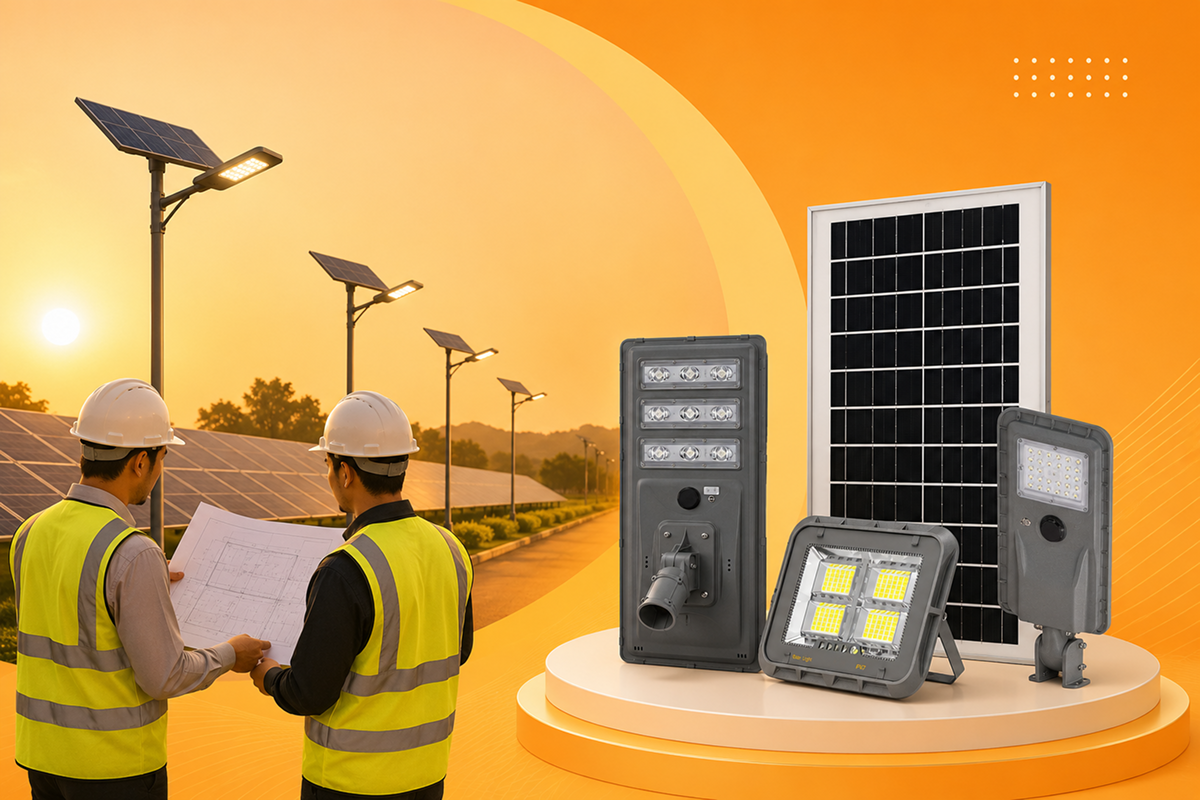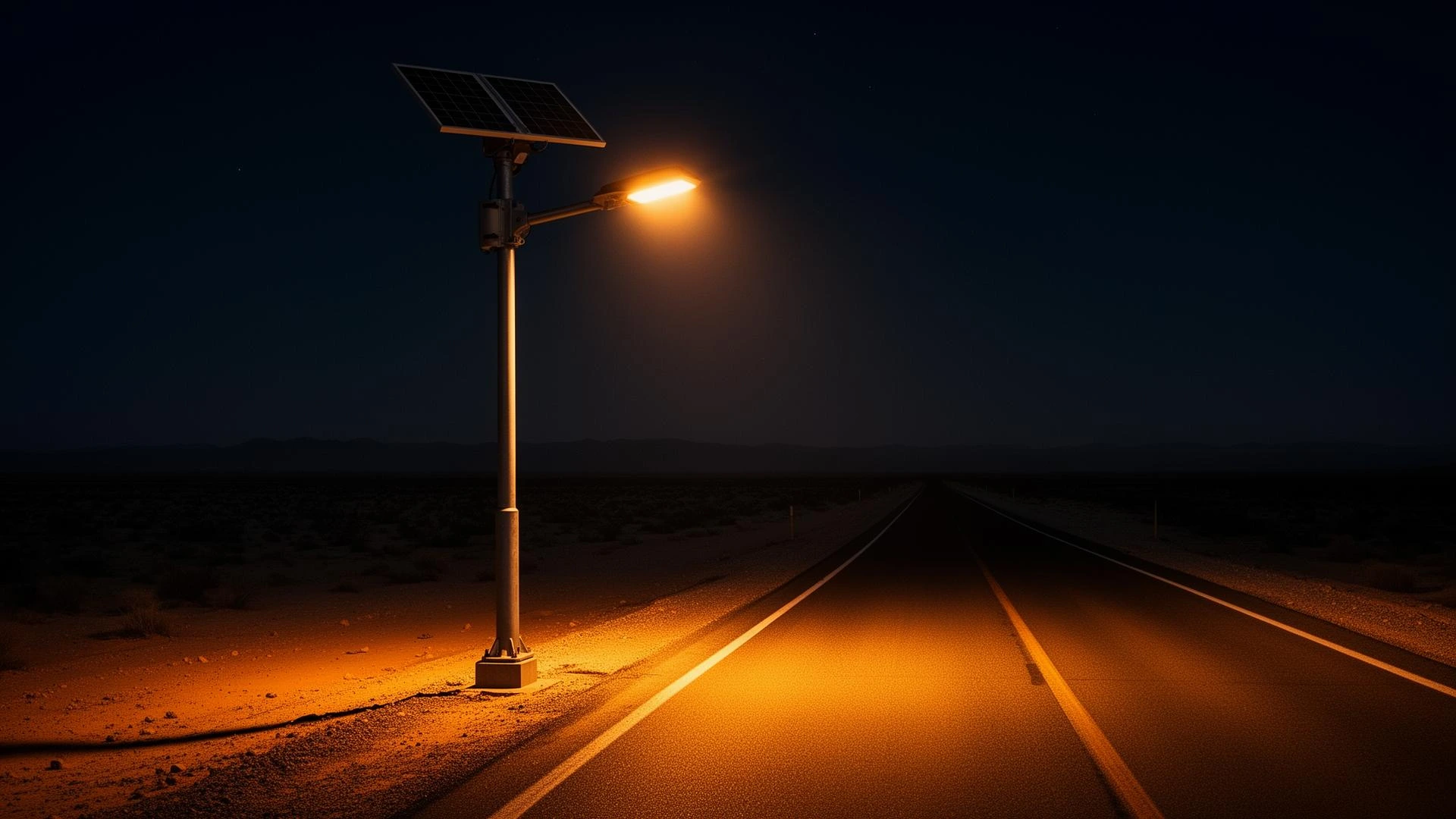
Selecting the optimum Solar LED street lights for large scale project For the implementation of a large-scale solar LED street light project, you need to consider several items, including the lighting performance, the battery capacity, the installation of the lights, durability, and the long-term maintenance costs. Every factor can affect the success of your project.
1. Lighting Performance and Light Distribution
As the primary objective in installing solar street lights, we should first ensure that they properly illuminate and maintain the area at the required brightness.
Lumen Output
Ensure enough bright lighting on roads, pathways, parking lots, and other areas is delivered by comparing and checking the light output of the LED light fixture and the total efficient lumens the LED delivers.
Optical Design
An effective optical system ensures smooth and even illumination, with minimal dark spots, glare, or lost light.
Project Requirements
Take into consideration road width, pole height, spacing, traffic, and light levels when choosing the fixture.
2. Battery Capacity and Technology
The battery stores solar energy during the day and supplies power to the lights at night.
LiFePO4 Batteries
LiFePO4 batteries have great potential and are popular for present solar lighting systems due to their good match to LiFePO4’s great cycle life, thermal stability, and strong charge/discharge behavior.
Backup Requirements
A large installation’s battery capacity and duration would be specified as a function of local sunlight conditions and weather.
3. Solar Panel Efficiency
Solar panels are rated by their ability to convert light into electricity.
Monocrystalline Panels
Solar street lights can use a wide variety of solar panel sizes since monocrystalline solar panels are able to achieve high conversion rates with a smaller surface area.
Local Sunlight
Panel capacity should be selected according to the project’s location, available sunlight, weather conditions, and expected daily lighting hours.
4. Smart Controls and Dimming
Smart control features can help manage energy consumption and improve system performance.
Automatic Operation
The solar streetlights can be set to automatically switch on or switch off based on timing schedules or ambient brightness.
Dimming and Sensors
Dimming profiles and motion sensors can reduce power consumption during periods of low activity while maintaining appropriate illumination when required.
5. Weather Resistance and Durability
Outdoor lighting systems must be prepared to operate in changing weather conditions.
IP Protection
Look for an appropriate IP rating to protect the light against dust and water. TedLighting’s Solaris Series, for example, is designed with IP66 protection for outdoor applications.
Strong Construction
Durable aluminum housing and suitable mounting components can help the lighting system withstand demanding outdoor environments.
6. All-in-One or Split System
The right system design depends on the project’s size, location, and energy requirements.
All-in-One Systems
All-in-one solar street lights combine major components into a single unit, which can simplify transportation and installation.
Split Systems
Split systems keep the solar panel and lighting components separate and can provide greater flexibility for projects requiring larger solar panels or different installation arrangements.
7. Customization and Scalability
Large-scale projects often have different requirements from one location to another.
Custom Configuration
Consider whether the manufacturer can adjust panel capacity, battery size, lighting power, and control settings according to your project.
Future Expansion
A scalable approach can simplify the task of maintaining specification consistency if more streets, facilities, or project stages get added to the project.
8. Total Cost of Ownership
Selecting the most inexpensive product will often result in the most expensive long-term solution.
Installation Costs
The utilization of solar street lighting can eliminate the dependency on grid connections, underground cables, and a complex electrical infrastructure where it’s applicable.
Maintenance Costs
Evaluate battery replacement, component durability, maintenance requirements, and expected operating performance when calculating the overall project cost.
9. Certifications and Quality
Quality documentation is especially important for municipal, commercial, and international projects.
Required Certifications
Check that the selected products meet the relevant safety, environmental, and technical requirements for your target market.
Quality Control
A reliable manufacturer should provide appropriate testing and quality documentation for the products supplied to your project.
10. Manufacturer Experience and Support
The Manufacturer you select will greatly determine the outcome of your project.
Technical Expertise
Choose a supplier that offers assistance in: system configuration and selection of products; lighting needs; and any project specifics.
Project Support
TedLighting offers personalized solar lighting solutions, OEM(Original Equipment Manufacturer) /ODM(Original Design Manufacturer), and project support to customers all over the world. It claims to have 15+ years of engineering expertise and customer projects in 160+ countries.
Why Choose TedLighting for Large-Scale Solar Lighting Projects?
Selecting an experienced manufacturer can make procurement and project planning easier. TedLighting provides solar LED lighting, outdoor lighting, and energy storage solutions, with customized configurations for different applications. Its project support includes product consultation, customized solutions, quality control, and technical assistance.
Conclusion
For large-scale projects, solar LED street light selection cannot be based only on price and wattage. Lighting performance, battery capacity, solar panel efficiency, intelligent control, robustness, system design, personalization, running cost, certification, and manufacturer support must be taken into consideration before purchasing.
Considering the above 10 factors, any project manager will be in a position to choose a solar light system that will be appropriate to the location, use, and goals and objectives. For more information and customized solar street light solutions and other types of solar lighting fixtures, entrepreneurs, contractors, and developers will receive assistance from the specialists and technicians of TedLighting.