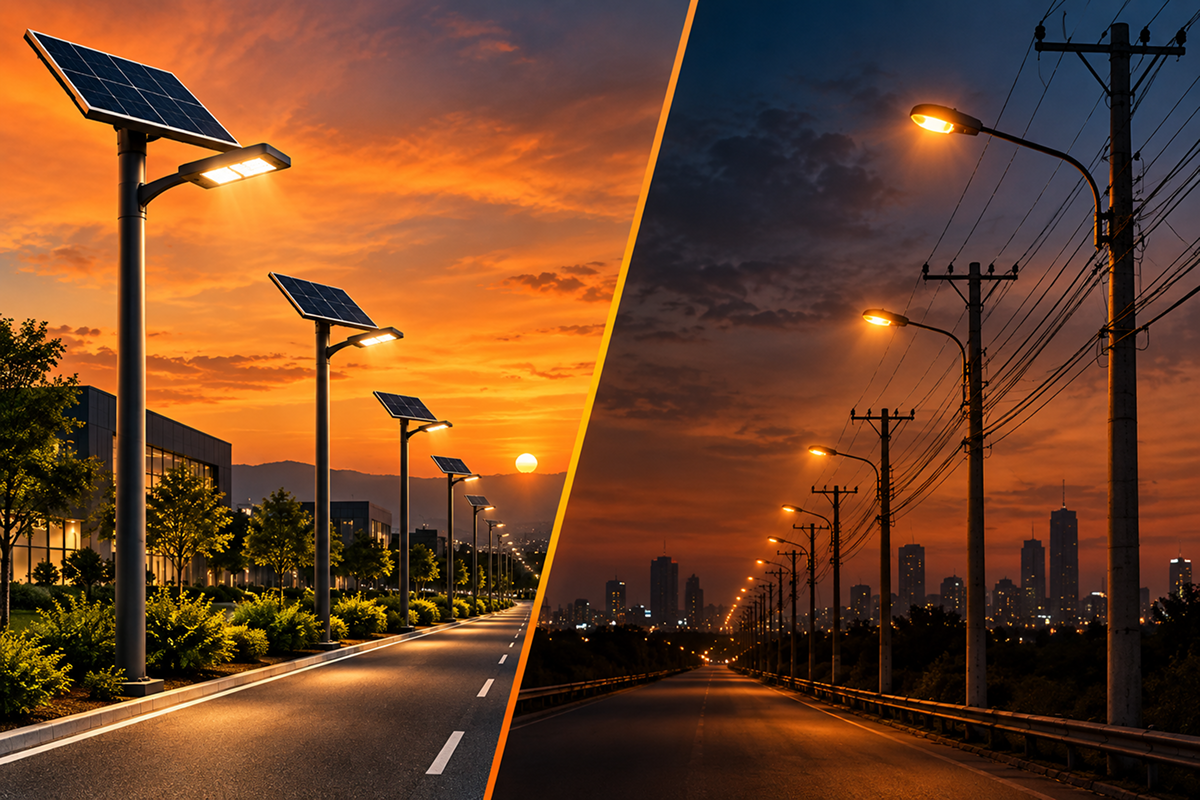
Energy consumption, expenditure, and maintenance costs would have to be balanced when you are considering the best approach for a street light system to buy. Street lights on solar energy absorb electric power from the sun with the help of solar panels, whereas street lights on the grid use electric power from the grid.
As a city planner, contractor, or business owner, we are all concerned about the cost and the investment value. The better is the solar street light or a grid-powered street light?
Let us make a comparison in simple terms.
1. Upfront Costs: Equipment vs. Installation
Grid-powered lights may seem cheaper at first. The light itself can cost less than a solar light.
But installation can be expensive.
Grid-powered lights may need:
- Trenching: Workers dig to install underground cables.
- Cabling: Power cables must be installed.
- Permits: Some projects need permits and utility fees.
- Road Repair: Roads or sidewalks may need repairs after digging.
These costs can make grid-powered lighting more expensive. This is especially true when the power grid is far from the project site.
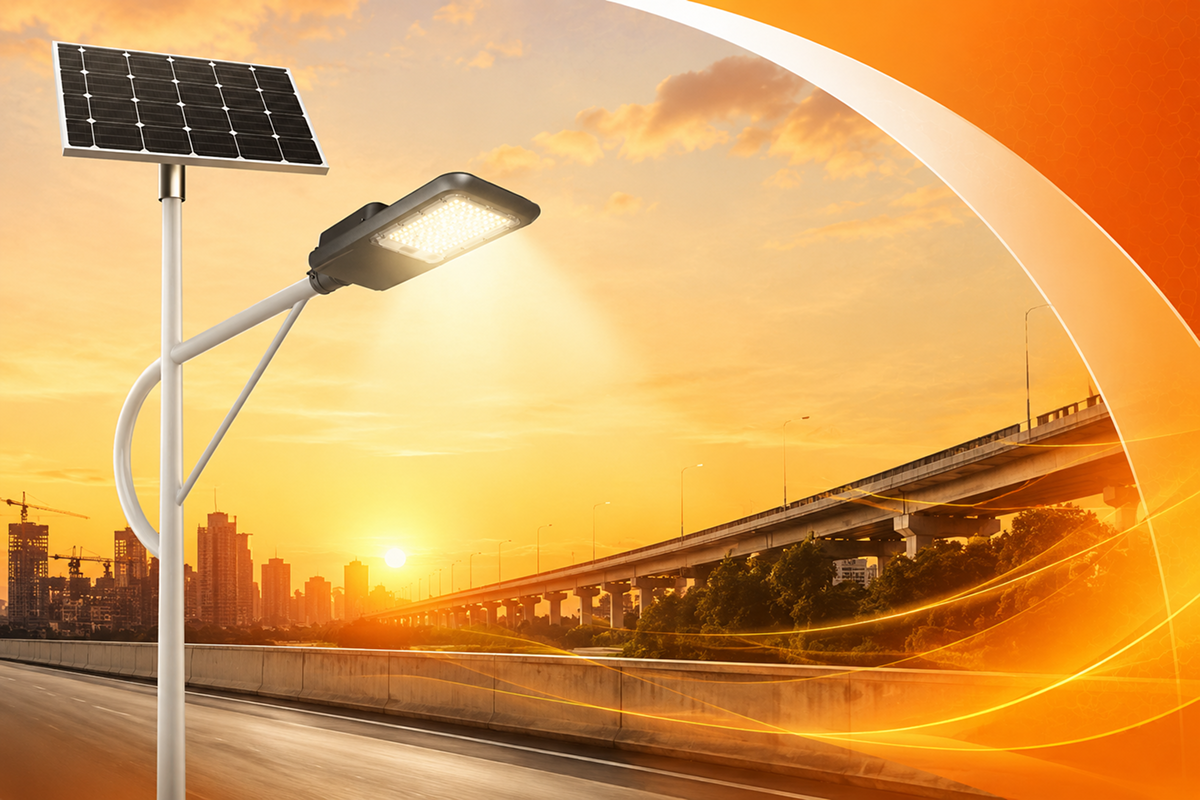
Solar street lights usually cost more to buy. They include a solar panel, battery, LED light, and controller.
However, they do not need a grid connection. They also do not need long underground power cables. This can reduce installation costs.
2. Operating Costs: No Electricity Bills vs. Ongoing Costs
This is one of the biggest benefits of solar lighting.
Grid-powered lights use electricity from the utility grid. You have to pay electricity bills every month.
These costs continue for as long as the lights are running. Electricity prices may also increase over time.
Solar street lights get their energy from the sun. They do not need electricity from the grid.
This means there are no regular grid electricity bills. Over time, this can lead to major savings.
3. Maintenance: Simple Upkeep vs. Grid Repairs
Both systems need maintenance. However, their maintenance needs are different.
Grid-powered lights depend on underground cables and other electrical equipment. A cable problem can cause a light to stop working.
Finding underground faults can also take time. Repairs may require digging and extra labor.
Solar street lights are self-contained. Each light has its own solar panel, battery, and lighting system.
If one light has a problem, the other lights can keep working.
Solar lights still need some maintenance. Solar panels may need cleaning. Batteries also need replacement after several years.
4. ROI and Payback Period
ROI means return on investment. It shows how much value you get from your investment over time.
Grid-powered lights often have lower equipment costs. But you continue to pay for electricity and maintenance.
Solar lights can cost more at the beginning. However, they can save money on electricity and grid connection costs.
The payback period depends on the project. It can vary based on:
- Installation costs
- Electricity prices
- Number of lights
- Sunlight levels
- Maintenance costs
- Equipment quality
Projects in remote areas may benefit more from solar lighting. This is because grid connections can be expensive in these locations.
5. Other Important Benefits
Solar street lights offer more than cost savings.
- Reliable Lighting: Solar lights can keep working during grid power outages if their batteries have enough stored energy.
- Clean Energy: Solar lights use energy from the sun. This can reduce the use of grid electricity.
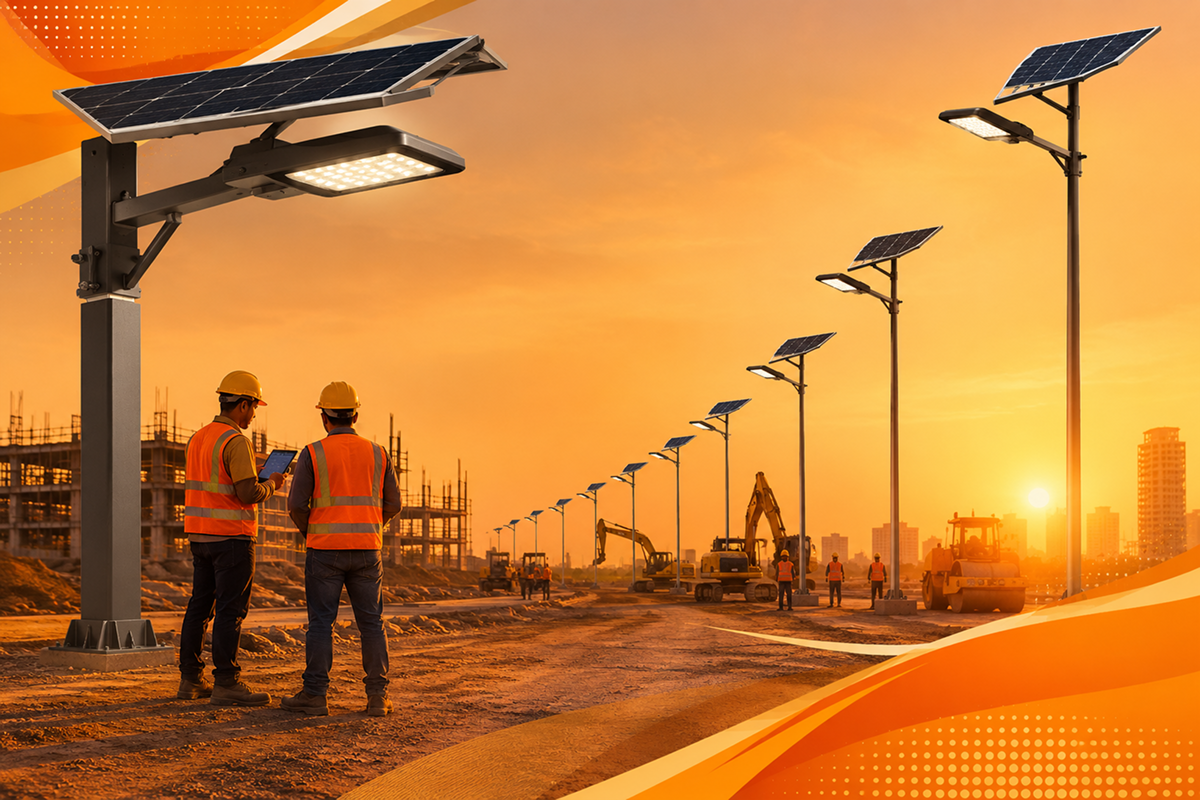
- Easy Installation: Solar lights do not need underground power cables. This makes installation easier in many locations.
- Remote Use: They are useful for roads, parks, parking areas, and other places without easy access to the power grid.
- Less Digging: Since there is no need for long power cables, solar projects can reduce digging and road damage.
Conclusion: Which One Delivers Better ROI?
In many cases, solar-powered street lights can deliver greater ROI than grid lighting solutions in the long term.
But you want to determine what’s best for your project, depending on your location, the price you can spend, and your operating expenses for electricity and installation setup.
Grid-powered lights may work well when grid infrastructure is already available.
Solar lights can be a better choice when grid connection is expensive or difficult.
Solar street lights can offer:
- Lower installation costs in some locations
- No regular grid electricity bills
- Simple and predictable maintenance
- Energy independence
- Reliable lighting during many power outages
Looking at the total cost can help you make a better decision. Solar street lighting can reduce long-term costs and support cleaner infrastructure.
Planning a lighting project? TedLighting provides solar LED lighting solutions for municipalities, industrial parks, commercial projects, and more. The company offers custom solutions, OEM/ODM services, and project support. Contact TedLighting to discuss your project and find a solution that fits your needs.