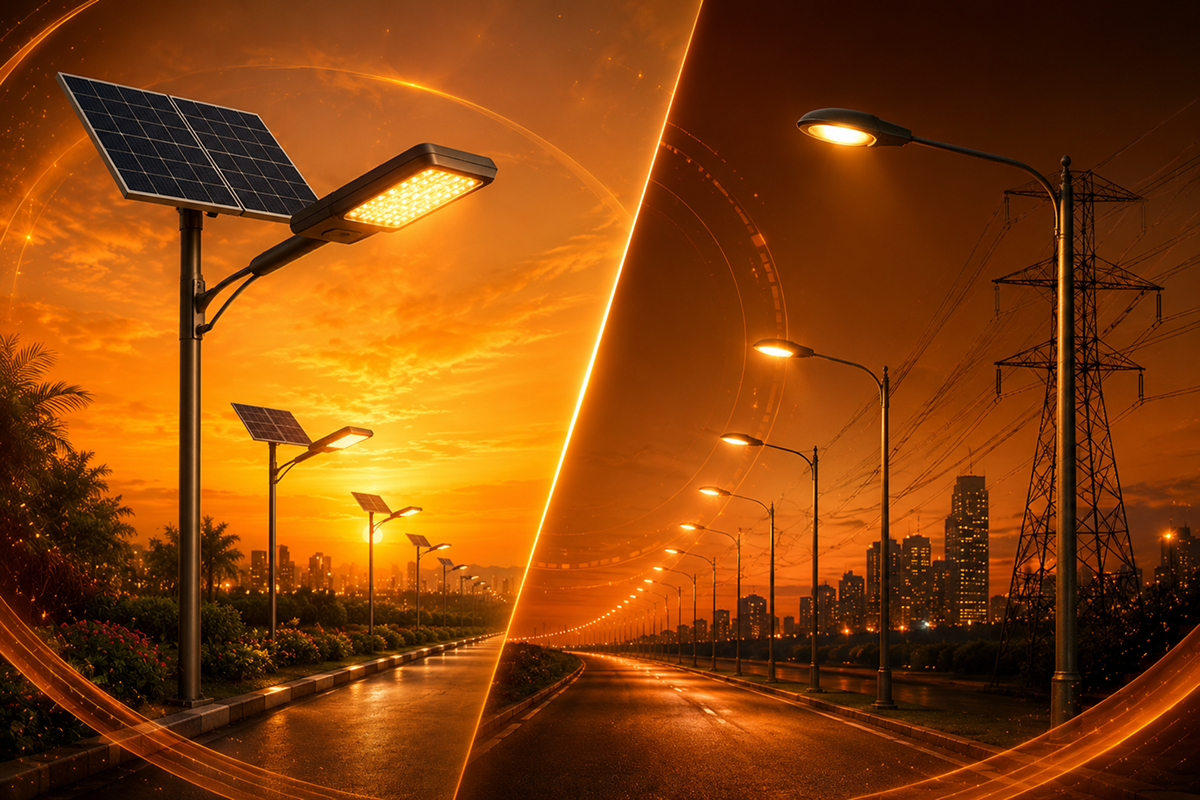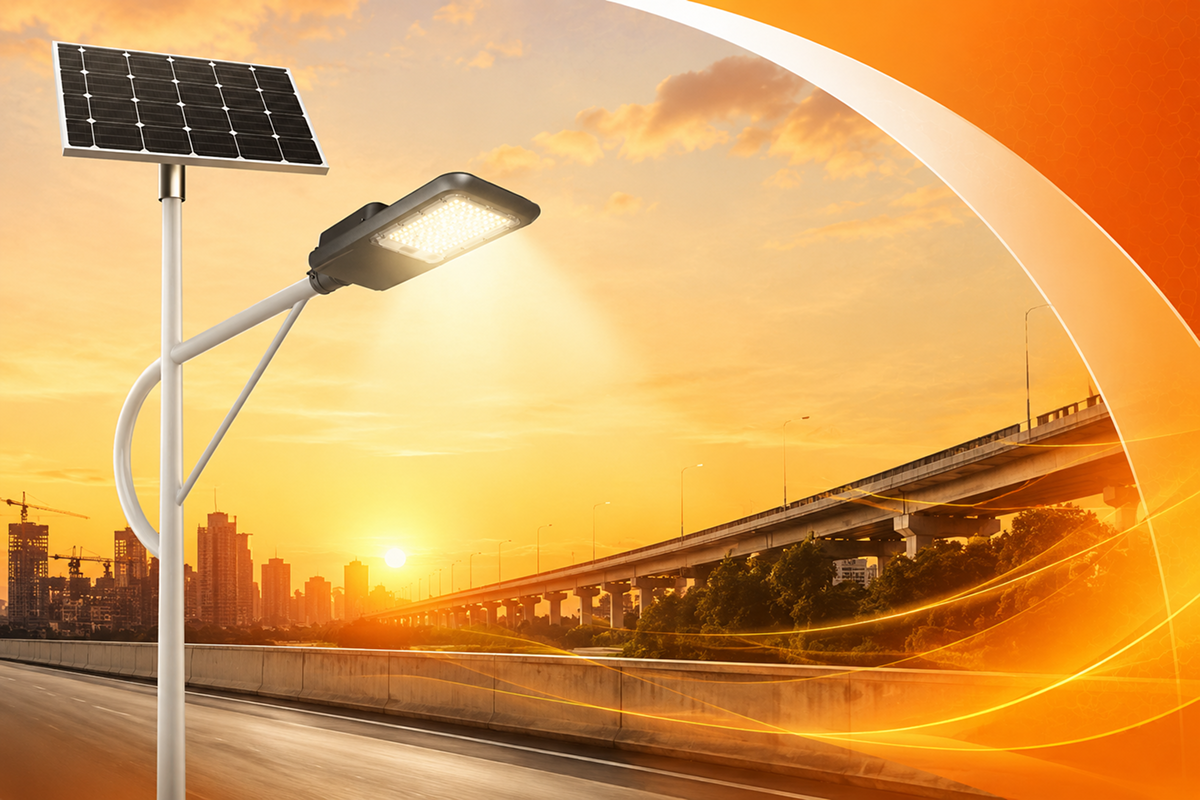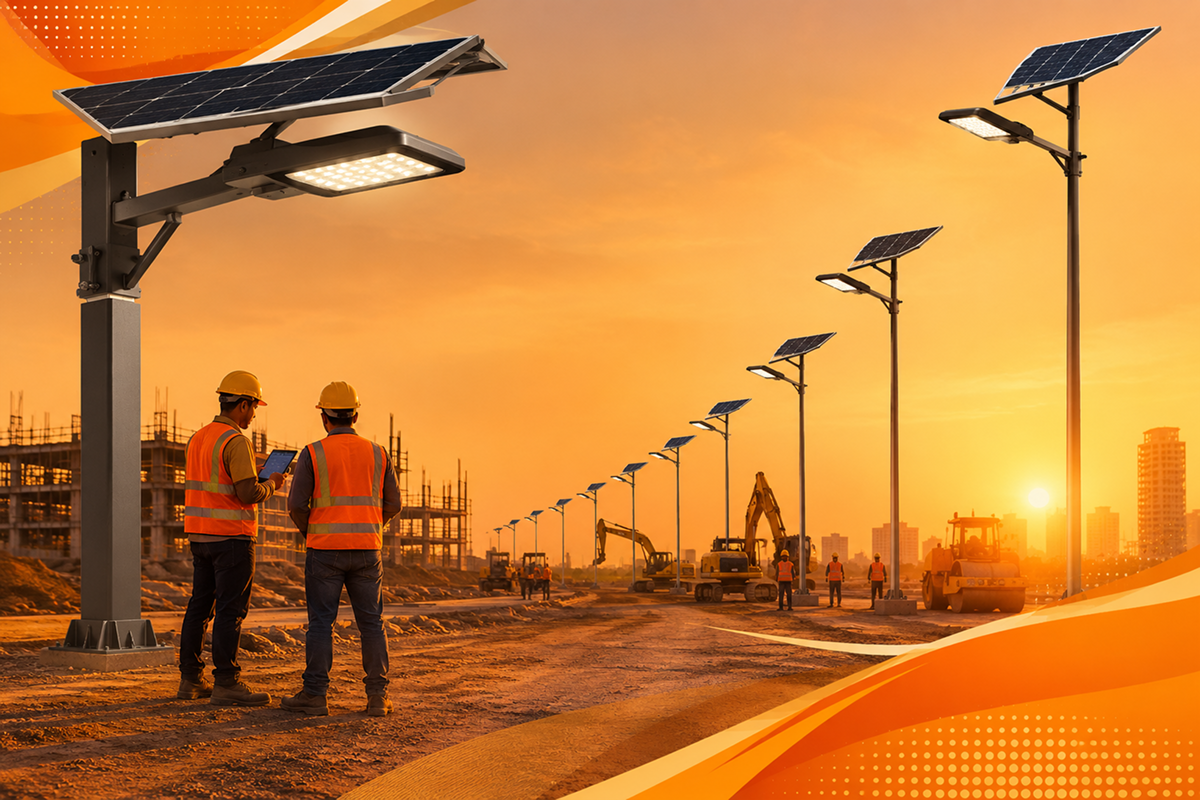
Is solar street lighting better than lighting? The answer is not a simple yes or no. It depends on the project, the location and what the infrastructure goals are. For infrastructure projects, especially in remote areas or where grid access is limited, solar street lights offer clear benefits. They don’t need cables. They don’t require electrical connections. They reduce long-term operating costs. They can be installed faster. In places like the Philippines and South Africa, where power supply is unreliable or expensive, solar lighting is becoming a practical and smart choice.
Solar Street Lights vs Grid Lighting: Key Comparison
| Factor | Solar Street Lights | Grid Street Lighting |
| Power source | Solar energy | Electricity grid |
| Underground cabling | Usually not required | Usually required |
| Grid connection | Not required | Required |
| Electricity cost | No regular grid electricity cost | Ongoing electricity cost |
| Installation | Faster in many locations | More infrastructure work |
| Remote locations | Excellent option | Can be difficult |
| Existing urban infrastructure | Depends on site | Strong option |
| Maintenance | Battery and panel maintenance | Electrical and fixture maintenance |
| Energy independence | High | Low |
| Weather dependence | Solar resource must be assessed | Less affected by sunlight |
| Initial equipment cost | Can be higher | Often lower for existing grid areas |
| Long-term operating cost | Potentially lower | Depends on electricity rates |
The table shows why there is no universal winner. Infrastructure planners need to evaluate the entire project.
Dense Areas
For dense urban areas with existing electrical networks grid lighting may still be the better option. It provides power. It supports output and continuous lighting. It avoids the need for battery storage. If the grid is stable and accessible, a planned grid system can be more reliable and cost-effective over time.
Cost
The key is not to compare one light against another. The real comparison should be between the cost of ownership. That includes the cost, installation, energy use, maintenance and replacement over the life of the project.
Solar street lighting does not replace grid lighting in all cases. Instead it offers an alternative where grid access is difficult, expensive or insecure. Both systems have a role in infrastructure planning.
Performance
For infrastructure buyers the focus should be, on system performance. Look beyond wattage. Check battery quality, LED efficiency, protection ratings and photometric design. Choose a supplier who provides testing records, certifications and technical support.
In the end the best lighting solution is the one that fits the project. The location, the budget, the long-term goals. For some projects solar is the choice. For others grid is better. Base the decision on facts, not assumptions.
Which Light is Better for New Infrastructure?
For new infrastructure projects solar street lighting can be the better choice when connecting to the grid is expensive, unreliable or not possible. It cuts down on cable work avoids electricity bills and makes installation much simpler. It’s especially useful in places where extending the network would take a long time.
Grid lighting still works well in areas that already have a stable power supply and high demand for lighting. The best strategy is not to replace every grid street light with solar. Instead planners should figure out where each system gives the results in terms of both technical performance and cost.
Is Solar Street Lighting Better Than Grid Lighting?
For many new infrastructure projects, solar street lighting can be the better choice when grid connection is expensive, unreliable, or unavailable.
It can reduce cable infrastructure, avoid ongoing grid electricity costs, and simplify installation. It can also provide lighting in locations where extending the electrical network would take significant time.
Grid lighting remains a strong option for established urban areas with reliable electrical infrastructure and high lighting demands.
The best approach is therefore not to replace every grid street light with solar.
Instead, project planners should identify where each system creates the strongest technical and financial result.
TedLighting Solar Street Lighting for Infrastructure Projects
TedLighting provides LED street lights and regular outdoor LED lighting for infrastructure projects throughout the Philippines, Middle East, Africa and other global markets. Their solutions are used on roads in zones, industrial parks, communities, parking areas, and anywhere grid power is missing or unreliable.
FAQs About Solar Street Lights vs Grid Lighting
1. Are solar street lights better than grid lighting?
Solar street lights can be better for roads and infrastructure projects where grid electricity is unavailable, unreliable, or expensive to extend. Grid lighting can be more practical in dense urban areas that already have reliable electrical connections.
2. What is the main advantage of solar street lights?
The main advantage is that solar street lights generate and store their own energy. They do not need a continuous grid connection or underground power cables, which can simplify installation in remote and new infrastructure areas.
3. Are solar street lights suitable for infrastructure projects in the Philippines?
Yes. Solar street lights can suit rural roads, subdivisions, public areas, and other Philippine infrastructure projects where grid expansion is difficult or costly. System design should account for local weather, solar availability, road requirements, and battery capacity.
4. Are solar street lights suitable for South Africa?
Yes. South Africa has many locations where solar lighting can reduce dependence on grid infrastructure. Solar systems can also be useful in areas affected by power interruptions, limited network capacity, or underground cable theft.
5. Which is cheaper, solar street lights or grid lighting?
The answer depends on the project. Grid lighting may have a lower initial equipment cost when electrical infrastructure already exists. Solar lighting can provide better long-term value when a project would otherwise require expensive cabling, grid connections, trenching, and ongoing electricity costs.
6. Do solar street lights work during rainy or cloudy weather?
Yes. Solar street lights store energy in batteries during daylight hours, allowing them to operate at night even when the current day’s sunlight is limited. Proper battery capacity and system sizing are important for locations with frequent cloudy or rainy conditions.
7. How long do solar street lights last?
The LED fixture and other components can operate for many years, while the battery generally has a shorter service life and may eventually need replacement. Actual lifespan depends on component quality, climate, operating conditions, and maintenance.
Conclusion
For infrastructure contractors, municipalities, EPC companies and government buyers the right lighting system starts with the site. Factors like road width, pole height spacing between lights how hours the lights need to run local sunlight levels, weather patterns, lighting goals and the project’s exact location all matter before deciding on the final setup.
Solar street lights are not a different way to power lights. They are an infrastructure option that can completely change how a road lighting project is planned, built and run.
For projects in the Philippines, South Africa and across Asia doing a site- comparison between solar and grid lighting can help show which solution offers the stronger long-term benefit.